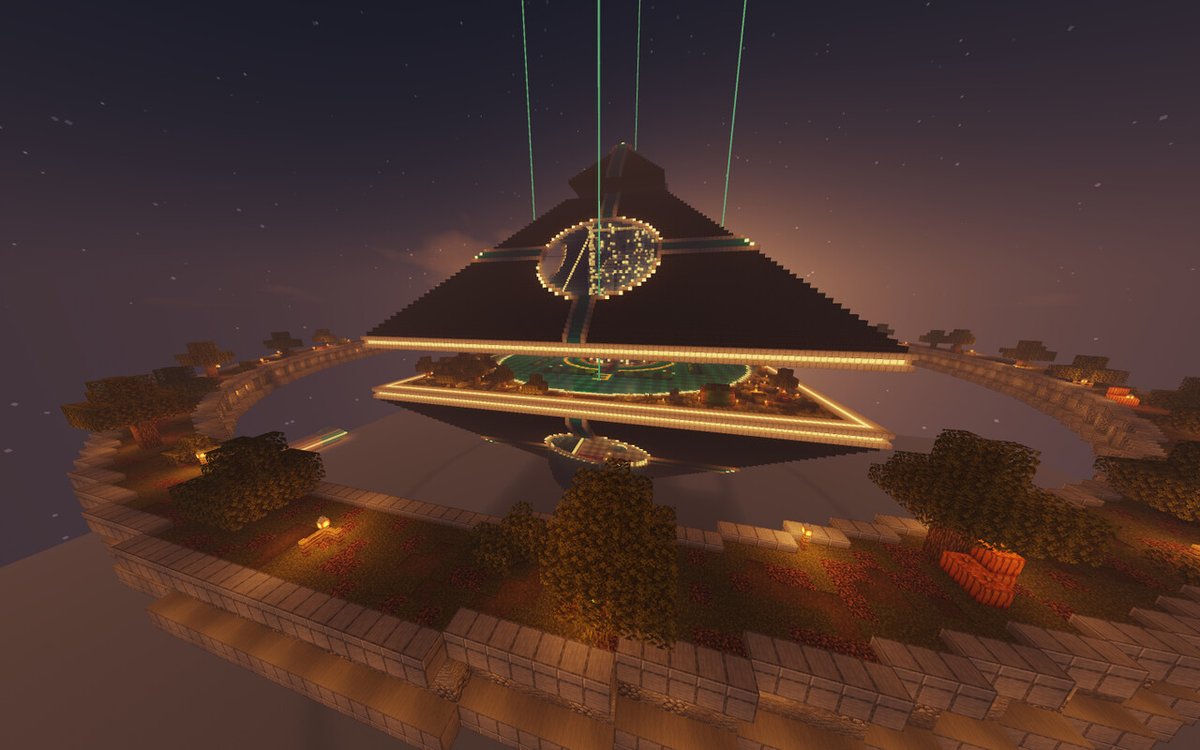
Embarking on a Minecraft mega base project isn't just about placing a lot of blocks; it's a monumental undertaking that demands meticulous Mega Base Planning & Design. Without a clear vision, robust strategy, and an understanding of both aesthetics and logistics, your dream build can quickly crumble into a chaotic, unfinished mess. This isn't just about scale; it's about creating a living, breathing hub that serves every facet of your survival world, from storage and farms to transportation and trade.
Think of it as constructing a miniature, functional city within your game. It requires the foresight of an architect, the pragmatism of an engineer, and the patience of a seasoned explorer. Get it right, and you'll have a truly awe-inspiring monument to your Minecraft prowess. Get it wrong, and you'll be swimming in regret (and probably lava).
At a Glance: Crafting Your Dream Mega Base
- Start with Vision: Define your base's purpose, theme, and overall aesthetic before you even break a single block.
- Location is Key: Choose a site that supports your design, offers resources, and minimizes future headaches like mob spawns.
- Prototype in Creative: Test layouts, block palettes, and complex Redstone systems in a creative world to iron out flaws.
- Balance Form & Function: Integrate efficient farms, storage, and transport systems seamlessly within your stunning architecture.
- Plan for Growth: Design storage and infrastructure with future expansion in mind to avoid constant reworks.
- Sustain Motivation: Break down huge tasks into smaller milestones and celebrate progress to stay engaged.
Laying the Foundation: From Concept to Cornerstone
A mega base, by definition, is an oversized anchor in your Minecraft world. It's where you centralize everything: storage, farms, portals, villager trading halls, and transport networks. This isn't a weekend build; it's a long-term commitment. So, how do you even begin to approach such a colossal task?
The secret lies in the planning. Just like a real-world skyscraper needs blueprints, your mega base needs a comprehensive strategy.
Visualizing Your Empire: Choosing a Design & Style
Before you even think about block types, consider the soul of your base. What story do you want it to tell? Are you aiming for a majestic, sprawling European-style castle or perhaps a serene Japanese castle nestled in a mountain range? Maybe something more unconventional, like an ultra-modern futuristic complex or even a whimsical city in the sky?
Inspiration is everywhere: real-world architecture, sci-fi movies, fantasy games, or even other amazing builds from the Minecraft community like those showcased in these fantastic designs.
Key Actionable Insight: Define a clear, consistent style early on. Will it be medieval, steampunk, sci-fi, organic, or something completely unique? Sticking to a theme—e.g., using a specific block palette, consistent lighting, and recurring architectural motifs—will give your mega base internal consistency and a truly polished feel. Avoid mixing too many disparate styles, as this can lead to a disjointed appearance.
Some compelling ideas to get your creative gears turning:
- Underground Cave System: A hidden fortress, naturally protected and ripe for elaborate tunnel networks.
- Walled City: A classic, offering space for distinct districts and a grand scale.
- Space Station: Perfect for the End or a high-altitude build, pushing architectural boundaries.
- Underwater Base: A challenging yet rewarding build, offering unique visual appeal and mob safety.
- Giant Pirate Ship or Tanker: For nautical enthusiasts looking for a dynamic, mobile-feeling structure.
- Pyramid or Temple Complex: Timeless and imposing, fantastic for large-scale symmetrical builds.
- Themed Fantasy: Imagine an elaborate tree city, a dwarven stronghold, or an arcane mage tower.
The more distinct your vision, the easier it will be to make design decisions down the line. Don't be afraid to explore crazy mega bases for out-of-the-box inspiration!
The Land Speaks: Selecting Your Mega Base's Home
Your chosen location is arguably the most crucial decision you'll make in Survival mode, profoundly impacting efficiency, resource gathering, and even the base's overall theme. This isn't just about pretty views; it's about strategic placement.
Critical Considerations for Site Selection:
- Resource Proximity: Are crucial blocks like wood, stone, sand, clay, and iron ore within easy reach? Traveling vast distances for basic materials becomes incredibly tedious over time. Consider nearby biomes for specific needs—a desert for sand, a forest for various wood types, oceans for coral or prismarine.
- Scenic Views: While secondary to function, a breathtaking view can make your long building hours much more enjoyable. Think about mountain vistas, ocean panoramas, or even the subtle beauty of a plains biome at sunset.
- Biome Theme Matching: Does the biome complement your chosen design style? A snow biome for an ice palace, a jungle for an ancient temple, or a flat plains biome for a sprawling modern city.
- Expansion Space: Mega bases grow. Always choose a spot with ample surrounding land (or sky/water) for future expansion without having to relocate.
- Terraforming Effort: How much landscape modification will you need to do? Leveling mountains or draining oceans can be massive projects in themselves. Sometimes, a naturally flat area is better for beginners, while seasoned players might embrace a challenging terrain.
- Chunk Alignment: For advanced Redstone farms (like iron farms or mob grinders), aligning your base with chunk borders can significantly improve efficiency. This is a detail often overlooked but crucial for top-tier automation.
- Nether Access: A short, efficient route to the Nether via a well-designed Nether hub is non-negotiable for fast travel and resource transport. Plan your portals carefully.
- Mob Spawn-Proofing: Hostile mobs are a constant threat. Consider how easily you can light up or slab/carpet large areas to prevent unwanted spawns within and around your base.
- Recommended Spot: Mushroom islands are often recommended for their complete lack of hostile mobs, providing an unparalleled safe zone. The trade-off is often extensive terraforming and limited natural resources, requiring import. Alternatively, enabling Large Biomes in world generation creates vast, uniform landscapes perfect for colossal, themed builds, though they lack the inherent safety of mushroom islands.
Blueprinting Your Vision: Planning in Creative Mode
Leaping straight into Survival mode for a mega base is like trying to build a house without an architect's plan—it's inefficient, frustrating, and prone to costly mistakes. This is where Creative mode becomes your best friend. Prototype everything.
What to Plan and Test:
- Block Palette and Materials: Experiment with different block combinations. How do various stones, woods, concretes, and terracottas look together? Test contrast, depth, and the impact of different light sources (glowstone, sea lanterns, shroomlights, hidden lights). This is your chance to discover your ideal aesthetic without mining thousands of blocks in vain.
- Base Size and Proportions: Use simple blocks to map out the overall footprint. How large will your main structures be? How do they relate to each other? Consider sightlines, major pathways, and how the scale feels as you walk through it.
- Style and Techniques: Test specific architectural elements: ornate facades, unique roof shapes, intricate detailing, lighting schemes, and landscaping ideas. This is where you develop the "how" of your build.
- Footprint and Site Plan: Lay out courtyards, module locations (farms, villager halls), portal areas, and transport routes. A general site plan ensures everything has its place.
- Location Testing: Create a copy of your Survival world and experiment with potential locations. See how your proposed design interacts with the natural terrain. This can save you from committing to a location that ultimately doesn't work.
Tools of the Trade (Optional but Recommended):
For serious builders, tools like Litematica (for schematics and projections) or WorldEdit (on a test server for rapid prototyping) can dramatically accelerate your planning phase. These allow you to precisely overlay designs onto your world or quickly terraform large areas to visualize changes.
Practical Tips for Creative Planning: - Test Material Gathering Routes Early: Even in Creative, mentally walk through how you'd gather materials. This helps identify resource bottlenecks before they happen.
- Set Up a Beacon: In Creative, simulate the mining process by placing a beacon with Haste II. This gives you a realistic feel for the speed you'll achieve in Survival.
- Utilize Shulker Boxes: Plan your storage and transport around Shulker boxes. In Creative, fill them with test blocks to simulate how they'll function in your logistics chain.
The Harmony of Purpose: Aesthetics Meets Function
A truly great mega base doesn't just look amazing; it works flawlessly. The challenge lies in integrating complex functional elements—farms, storage, transport—without sacrificing visual appeal. This balance is critical to prevent your base from becoming either a beautiful but useless monument or a hyper-efficient but ugly block of mechanisms.
Elevating Aesthetics:
- Repeating Forms and Patterns: Use consistent architectural elements (arches, columns, specific block transitions) to create a sense of unity and grandeur.
- Structural Supports and Cornices: Add details that suggest real-world structural integrity, even if they're purely decorative. Cornices, buttresses, and roof overhangs add depth.
- Strategic Lighting: Beyond just spawn-proofing, use lighting to create ambiance, highlight architectural features, and guide the eye. Hidden light sources can illuminate without being intrusive.
- Vegetation and Water Features: Incorporate trees, gardens, ponds, and fountains to break up monotonous areas and add organic life.
- Depth and Texture: Avoid flat walls. Use varying block depths, fences, stairs, slabs, and different block textures to add visual interest.
Maximizing Function:
- Integrated Farms: Seamlessly blend your iron, food, mob, and wood farms into the overall design. Can your villager trading hall be a bustling market square? Can your tree farm be a beautiful forest?
- Efficient Transport Systems: Implement short, intuitive routes for walking, flying (Elytra), and potentially even ice-boat highways or minecart networks.
- Clear Wayfinding: In a large base, it's easy to get lost. Use clear signs, distinct architectural landmarks, and color-coded pathways to help navigation.
- Performance Optimization: Large builds can strain game performance. Chunk-aligning farms, using efficient Redstone circuits, and avoiding unnecessary entity stacks (like dropped items) are crucial.
- Robust Safety Measures: Ensure comprehensive lighting, consistent spawn-proofing (slabs, carpets, buttons), and secure, well-lit Nether routes to prevent unexpected encounters.
The ideal is a base where you might admire a grand hall, only to realize that the pillars are cleverly disguising a Redstone conduit or that the waterfall is part of an item elevator.
The Central Nervous System: Storage Hall and Item Sorting
A mega base generates, processes, and stores an astronomical amount of items. Without an intelligently designed storage system, your progress will grind to a halt amidst endless chest rummaging. Your storage hall isn't just a room with chests; it's the central hub, the lifeblood of your entire operation.
Key Actionable Insight: Plan for more storage than you think you'll ever need. Seriously, double it. Then add a bit more. Mega bases are inherently expansive, and running out of storage space is a common, frustrating bottleneck. Design modularly, allowing for easy expansion.
Essential Features of a Superior Storage System:
- Automatic Item Sorters: These are a game-changer. Utilize hoppers, droppers, observers, and water streams to automatically sort incoming items into their designated chests. Tutorials for these systems are abundant and worth the investment of time to build.
- Bulk Input: Create a main input line where you can dump shulker boxes full of random loot. The system should then automatically sort everything.
- Quick-Deposit Line: A convenient chest or hopper where you can quickly deposit common items without interacting with the full sorting system.
- Categorization: Organize your items logically. Dedicated sections for:
- Blocks: Stone types, dirt, sand, glass, concrete, terracotta.
- Decor: Flowers, dyes, paintings, item frames, banners.
- Redstone: Dust, repeaters, comparators, pistons, observers, droppers.
- Food: Raw and cooked meats, crops, potions.
- Mob Drops: String, bones, gunpowder, Ender pearls.
- Nether/End Items: Netherrack, quartz, glowstone, shulker shells.
- Wood Types: Each wood type should have its own set of chests for logs, planks, stairs, slabs.
- Expandability: Design your sorting modules so that new sections or entire wings can be added easily. Think vertical or horizontal expansion without rebuilding the core system.
- Central Workshop: Integrate all your essential crafting and utility stations directly into or adjacent to the storage hall:
- Anvils
- Crafting Tables
- Enchanting Table & Library
- Brewing Stand
- Ender Chest
- Bed (for respawn point)
- Map Room (for world navigation)
This integrated approach minimizes travel time and keeps your workflow smooth, making the massive task of building much more manageable. For those looking for a simple mega base concept, even a scaled-down version of this storage plan is crucial.
The Marathon Mentality: Sustaining Long-Term Motivation
Building a mega base is a marathon, not a sprint. The sheer scale can be daunting, and it's easy to lose steam halfway through. Maintaining motivation is a skill unto itself, almost as critical as the building techniques.
Strategies to Keep the Momentum Going:
- Break It Down: A "mega base" is an intimidating goal. Break it into smaller, manageable milestones. Instead of "build the mega base," think "finish the foundation," "complete the main storage hall," "build one farm module," or "decorate the entrance." Each completed mini-goal provides a sense of accomplishment.
- Work on Multiple Areas: Don't get stuck grinding on one repetitive task. If you're tired of mining stone, switch to designing a garden, setting up a Redstone circuit, or exploring for new resources. Variety is the spice of Minecraft.
- Celebrate Achievements: Big or small, acknowledge your progress. Take screenshots, update your world map, create timelapses, or even just pat yourself on the back. Seeing how far you've come can be a powerful motivator. You might even find inspiration in FalseSymmetry's timelapse of an awesome mega base for showing progress.
- Integrate New Game Features: Minecraft updates frequently introduce new blocks, mechanics, and possibilities. Look for ways to incorporate these into your existing or planned builds, breathing fresh life into the project.
- Remain Flexible: Don't be afraid to rework parts that aren't quite right. Your initial vision might evolve, or you might discover a better way to do something. Rigidity can kill creativity and fun.
- Take Breaks: Sometimes, the best thing you can do is step away from the game for a few days, or even weeks. You'll often return with a fresh perspective, renewed enthusiasm, and new ideas.
- Collaborate: If playing on a server, involve friends! Dividing tasks, bouncing ideas off each other, and having company can make the grind feel like a shared adventure. This is where renting a Minecraft server truly shines; it's a fantastic way to foster team building and bring diverse ideas to the table.
Your Grand Design Awaits: Building Beyond Blocks
The journey of building a Minecraft mega base is a profound demonstration of creativity, perseverance, and problem-solving. It's an iterative process where aesthetics and function must constantly inform each other, where solid planning mitigates future headaches, and where meticulous logistics keep your vast empire running smoothly. From the initial spark of an idea to the final decorative flourish, every step is an opportunity to learn and grow as a builder.
By meticulously planning your location, prototyping your designs in Creative, balancing visual appeal with practical utility, and establishing an efficient storage and transport system, you lay the groundwork for a truly epic build. Remember that long-term motivation is your most valuable resource; break down the work, stay flexible, and celebrate every milestone.
Whether you're crafting a simple yet elegant survival hub or an intricate, awe-inspiring monument, the principles of smart Mega Base Planning & Design will guide you. Now, go forth and build your Minecraft masterpiece! For an even deeper dive into every aspect of these colossal projects, explore our Ultimate Minecraft Mega Base Guide.