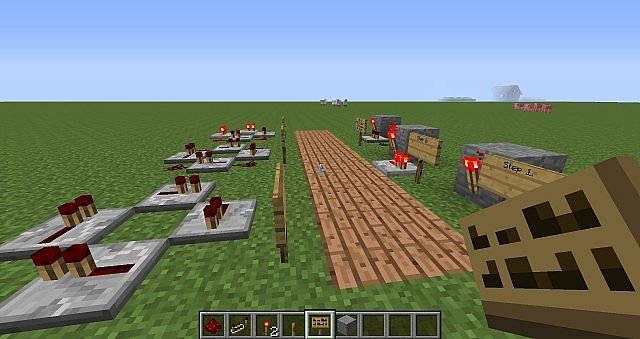
For ambitious Minecraft builders, the sheer scale of a mega base isn't just about impressive block counts or architectural grandeur; it's about making a sprawling empire function. This is where Redstone & Automation for Mega Bases becomes not just a luxury, but an absolute necessity. Imagine a vast, intricately designed world where resources flow seamlessly, farms tend themselves, and doors glide open with a mere presence – that's the promise of integrating redstone into your monumental builds.
Building a mega base is a journey of epic proportions, demanding meticulous planning and colossal resource gathering. But keeping such a structure alive and efficient requires more than just careful placement of blocks. It requires a nervous system, an underlying logic that connects every component and brings your vision to life. That nervous system is redstone.
At a Glance: Powering Your Minecraft Empire
- Redstone isn't just for simple farms. It's the infrastructure that turns a static build into a dynamic, living world.
- Plan your automation early. Integrating redstone from the blueprint stage saves massive headaches later.
- Efficiency at scale is key. Automated systems dramatically reduce the grind for resources and streamline operations.
- Aesthetics matter. Learn to hide your redstone wiring or make it an intentional design element.
- Start small, think big. Master foundational redstone concepts before tackling mega-scale projects.
- Troubleshooting is part of the fun. Embrace the puzzle of debugging your contraptions.
Why Redstone is the Heartbeat of Every Mega Base
A mega base isn't just a collection of impressive structures; it's an ecosystem. And like any ecosystem, it needs to sustain itself and its inhabitants. Without automation, managing the immense demands of a truly massive base becomes a relentless, often tedious, chore.
Think about the sheer volume of materials you'll need. Stone for a mountain fortress, wood for an expansive city, iron for tools and components – gathering these manually can consume hundreds, if not thousands, of hours. Redstone provides the solution, creating systems that generate, collect, sort, and even process resources with minimal player intervention. It's the difference between endlessly mining cobblestone and having a fully automatic quarry feeding directly into a sorting system.
Beyond raw resource management, redstone enhances the functionality and aesthetics of your base:
- Seamless Navigation: Automated doors, elevators, and minecart systems allow you to traverse immense distances or move between levels effortlessly.
- Self-Sustaining Operations: From mob grinders for XP and rare drops to automatic farms for every crop imaginable, redstone frees you from manual labor.
- Smart Storage: Forget endless rows of unsorted chests. Redstone-powered storage systems categorize, organize, and even distribute items.
- Dynamic Environments: Automated lighting, secret passages, and responsive mechanisms add a layer of interactivity and wonder to your build.
- Security & Defense: Redstone can power sophisticated traps, alarm systems, and protective barriers.
Essentially, redstone elevates your mega base from a static monument to a living, breathing entity. It's the enabler that allows you to focus on creative building and exploration, rather than getting bogged down in endless chores.
The Foundation: Planning Your Automated Ecosystem
Just as you wouldn't build a colossal castle without a blueprint, you shouldn't dive into complex redstone automation without a plan. For a mega base, early and integrated planning is paramount.
Blueprints for Automation
Before placing a single redstone dust, sketch out your ideas. Utilize tools like Minecraft Creative Mode, WorldEdit, or even simple pen and paper to visualize how automated systems will integrate into your overall layout. Consider:
- Resource Flow: Where will your farms be? How will items travel from production to storage? Which areas need quick access to specific materials?
- Player Movement: What are the main pathways? Where are vertical transitions needed? How can you minimize travel time between key locations?
- Power & Signal Paths: Where will your main redstone lines run? Can you centralize power sources? How will signals travel long distances without interference?
- Aesthetics vs. Function: Will your redstone be hidden behind walls and floors, or will it be an exposed, industrial design element?
- Scalability: Can your initial designs be expanded easily as your mega base grows?
Thinking through these questions during the initial Building your ultimate Minecraft base planning stages will prevent common pitfalls like rebuilding entire sections because your storage system doesn't fit or your elevator shaft intersects a vital corridor.
Building in Modules
For mega bases, adopting a modular approach to redstone is a game-changer. Instead of trying to design one monolithic system, break down your automation needs into smaller, self-contained modules:
- An automatic tree farm module.
- A centralized item sorting module.
- A multi-floor elevator module.
- A mob grinder module.
Each module can be built, tested, and refined independently before being integrated into the larger base. This approach simplifies troubleshooting and allows for easier upgrades or replacements down the line. It's much easier to fix a single broken auto-sorter than to debug an entire integrated logistics network.
Essential Redstone Systems for Mega Bases
Now, let's dive into the core applications of redstone that will transform your mega base.
1. Storage & Logistics: The Central Nervous System
The heart of any functional mega base is its ability to manage resources. Manual sorting and storage are unsustainable.
- Automated Item Sorting Systems: These are non-negotiable. Using hoppers and item filters (powered by comparators), you can funnel countless items into dedicated chests or shulker box loaders. Design for expandability, as your material needs will only grow.
- Bulk Storage & Shulker Box Loaders: For truly massive quantities, specialized systems that automatically fill, unload, and store shulker boxes are essential. These can store millions of items in a compact footprint.
- Item Transportation Networks:
- Hopper Lines: Simple and reliable for short distances or vertical transport, but can be slow and laggy over very long distances.
- Water Streams: Excellent for horizontal transport over medium distances, especially when combined with ice for speed. Requires careful design to prevent item despawning.
- Minecart Systems: The workhorse for long-distance, high-volume item transport. Design intelligent rail networks with loading/unloading stations, activators, and detection rails. Consider separate networks for different item types or destinations.
- Dropper/Dispenser Chains: Useful for vertical item transport, especially when you need to lift items many blocks high.
Mini-Example: Imagine a series of automated farms feeding into a main item transport line, which then delivers all raw materials to a central sorting facility. From there, sorted items are sent via secondary minecart lines to specific workshops, crafting stations, or dedicated bulk storage arrays.
2. Farms & Generators: The Lifeblood of Resources
Mega bases are resource hogs. Automated farms are your primary defense against the grind.
- Mob Grinders (XP & Drops): Essential for experience points, rare drops (like elytra from Endermen), and common monster drops (bones, string, gunpowder). Design efficient dark rooms, fall traps, or advanced systems utilizing magma blocks or suffocation.
- Crop Farms (Food & Materials): Wheat, carrots, potatoes, beetroot, pumpkins, melons – all can be fully automated using villagers, observers, and water streams. For huge bases, consider multiple large-scale farms or specialized designs that maximize yield.
- Tree Farms: Fully automatic tree farms are a redstone marvel, planting saplings, growing trees, and harvesting wood with pistons and TNT duplication or carefully timed choppers.
- Specialized Farms:
- Iron Golem Farms: Produce massive amounts of iron.
- Gold Farms (Nether): Critical for gold ingots and XP from Piglin bartering.
- Slime Farms: For sticky pistons and slime blocks.
- Wool Farms: Automatic sheep shearing for diverse building palettes.
- Concrete Converters: Automated systems to turn colored powder into concrete using water.
These farms, often working tirelessly in the background, ensure a constant supply of materials for building, crafting, and trading.
3. Movement & Access: Traversing Your Domain
Mega bases are vast. Moving around them shouldn't be a chore.
- Automated Doors: From simple piston doors for hidden entrances to elaborate 3x3, 4x4, or even larger mechanical doors that reveal grand halls or secret passages. Sensors (pressure plates, tripwires, observers) make them responsive.
- Elevators:
- Bubble Column Elevators: Simple, fast, and resource-efficient for vertical transport using soul sand (up) or magma blocks (down) and water.
- Piston Elevators: More complex but allow for controlled stops at multiple floors and can be designed to be hidden or themed.
- Minecart Stations: Design intelligent stations that summon carts, provide power, and detect arrivals. Complex networks can include junction changers and multi-destination systems.
- Automated Pathways/Bridges: Hidden bridges that extend over chasms or pathways that change based on conditions (e.g., security protocols).
4. Lighting & Ambiance: Setting the Mood
Redstone isn't just about utility; it's about atmosphere.
- Automatic Lighting Systems: Use daylight sensors to turn lights on at night and off during the day, preventing mob spawns and conserving power (if applicable in your setup).
- Hidden Lighting: Pistons can conceal and reveal light sources, creating dynamic lighting effects or illuminating secret areas.
- Decorative Lighting: Control arrays of redstone lamps or glowstone with switches, timers, or sequence generators to create intricate light patterns and enhance aesthetics.
5. Defense & Utility: Security and Convenience
Protecting your investment and adding convenience.
- Alarm Systems: Tripwires, pressure plates, or observer blocks can trigger alarms (note blocks, redstone lamps) to alert you to intruders.
- Automated Traps: Piston walls, lava pits, or dispensing arrays can deter or eliminate unwelcome guests.
- Auto-Crafting & Brewing Stations: Set up systems that automatically craft common items or brew potions once ingredients are supplied, speeding up repetitive tasks.
- Sorting & Distribution for Villager Trading Halls: Use redstone to manage incoming emeralds and outgoing trade goods efficiently.
Advanced Redstone Concepts for Mega Builds
Once you've mastered the basics, these concepts will help you optimize and innovate.
Compactness & Optimization
Space is often at a premium, even in a mega base. Learning compact redstone designs is crucial. Look for tutorials on "tileable" redstone, which allows you to repeat a small circuit design many times side-by-side. Minimizing components also reduces lag, which can become a significant issue in extremely large, redstone-heavy builds.
Signal Management & Long-Distance Transmission
Redstone signals only travel 15 blocks. For longer distances, you'll need:
- Redstone Repeaters: Boost the signal, add delay, and allow signals to cross.
- Redstone Comparators: Used for detecting item counts, signal strength, and subtracting signals – vital for complex logic and sorting.
- Wireless Redstone (Nether Portals): By linking two redstone lines through active Nether portals, you can transmit signals instantaneously across vast distances in the Overworld (or between dimensions) without physical redstone dust. This is an advanced technique but incredibly powerful for synchronized operations.
- Chunk Loading: Many redstone systems only operate when their chunks are loaded. For truly autonomous mega bases, you'll need to learn about chunk loaders (often involving Nether portals or specific game mechanics) to keep your remote farms and factories running even when you're far away.
Data Storage & Logic Gates
For highly complex systems, you might venture into digital logic.
- RS NOR Latches: Basic memory cells that can "remember" a state (on/off) until a new input changes it. Useful for toggling systems.
- T-Flip-Flops: Convert a momentary button press into a sustained on/off state, perfect for controlling doors or lights with a single button.
- Clocks: Generate pulsing redstone signals at various speeds, essential for automated farms and timed events.
- Advanced Logic Gates (AND, OR, NOT, XOR): Combine inputs to produce specific outputs, allowing for complex decision-making within your redstone circuits.
Troubleshooting and Best Practices
Redstone can be finicky. Even the most seasoned builders encounter issues.
Common Pitfalls to Avoid
- Chunk Borders: Redstone circuits spanning chunk borders can behave erratically, especially if one chunk unloads before the other. Design your critical circuits to be contained within single chunks whenever possible.
- Lag: Overly complex or inefficient redstone (especially rapid clock circuits or excessive hopper lines) can cause significant server or game lag. Prioritize compact, simple designs where possible.
- Power Limits: Not enough redstone power reaching a component or a component not receiving power due to incorrect placement.
- Signal Interference: Redstone dust can power adjacent blocks in unexpected ways. Always double-check your wiring to ensure signals don't cross or interfere.
- "Ghost Blocks" and Glitches: Sometimes, especially after updates, blocks might behave unexpectedly. Always test thoroughly.
Debugging Your Contraptions
- Systematic Approach: Don't just randomly break and replace blocks. Trace the redstone signal from input to output, block by block. Is power reaching where it needs to go? Is the timing correct?
- Visual Cues: Redstone dust lights up when powered. Repeaters and comparators have indicator lights. Observe these closely.
- Observer Blocks: These are your best friends. They detect block updates and can reveal subtle issues or provide critical timing information. Place them temporarily to see if a block is updating as expected.
- Creative Mode Testing: Recreate problematic circuits in a creative flat world to isolate and understand the issue without disrupting your main build.
- Start Small: Test individual modules before integrating them into the larger system.
Maintenance & Upgrades
As your mega base evolves, so too will your redstone needs.
- Labels & Documentation: For massive redstone builds, consider adding signs to label sections of your wiring or even keeping external notes. You'll thank yourself months later.
- Accessible Wiring: Design your redstone systems to be accessible for repairs and modifications. Don't bury critical components under layers of unmovable blocks.
- Keep Up with Updates: Minecraft updates can sometimes change redstone mechanics. Stay informed about major changes that might affect your builds.
Beyond the Basics: Pushing the Limits
Once you've mastered the integration of redstone into your mega base, what's next?
- Programmable Displays: Create giant pixel displays with redstone lamps, showing anything from intricate patterns to game-specific information.
- Working Computers: For the truly ambitious, redstone can be used to build rudimentary in-game computers capable of basic arithmetic or even playing simple games.
- Automated Builder Bots: With enough redstone and command blocks (or data packs/mods if on Java), you can create machines that literally build structures for you.
- Interactive Theme Parks: Design entire sections of your mega base as interactive experiences, complete with rides, puzzles, and hidden secrets powered by redstone.
The sky is the limit when it comes to redstone innovation. What starts as a simple piston door can evolve into a fully automated, self-sustaining city.
Your Next Steps: Building Smart
Redstone & Automation for Mega Bases isn't just about efficiency; it's about empowerment. It's about taking your grand visions and turning them into functional realities, allowing your mega base to grow, adapt, and serve its purpose with minimal effort.
Don't be intimidated by the complexity. Start with basic redstone gates, build a simple automated farm, then tackle a small item sorter. Each successful circuit will build your confidence and expand your understanding. Embrace experimentation, learn from your failures, and remember that every master builder started with a single piece of redstone dust.
The journey of building a mega base is a testament to patience and dedication. By integrating redstone thoughtfully, you're not just making your base bigger; you're making it smarter, more capable, and infinitely more rewarding. So grab your redstone, repeaters, and observers, and start wiring the future of your monumental Minecraft creation.